For the best experienceDownload the Mobile App


Business Logo

The Gospel Coalition

Open 24/7

Categories
Entertainment and Media

Opening Hours

S
M
T
W
T
F
S
All

Open 24/7

Open 24/7

Open 24/7

Open 24/7

Open 24/7

Open 24/7

Open 24/7

Days Opening Hours
Monday 8:00 AM - 5:00 PM
Tuesday 8:00 AM - 5:00 PM
Wednesday 8:00 AM - 5:00 PM
Thursday 8:00 AM - 5:00 PM
Friday 8:00 AM - 5:00 PM
Saturday 8:00 AM - 5:00 PM
Sunday 8:00 AM - 5:00 PM

About this Business

The Gospel Coalition exists to renew and unify the contemporary church in the ancient gospel by declaring, defending, and applying the good news of Jesus to all of life.One of the ways we do this is by publishing free multimedia resources designed to practically help Christians and church leaders apply the gospel and biblical wisdom to the litany of complex topics, questions, and challenges in contemporary life and ministry. Our video resources range from conference messages and breakout sessions to topical panel discussions, debates, podcast conversations, and more.

News & Announcements

View All

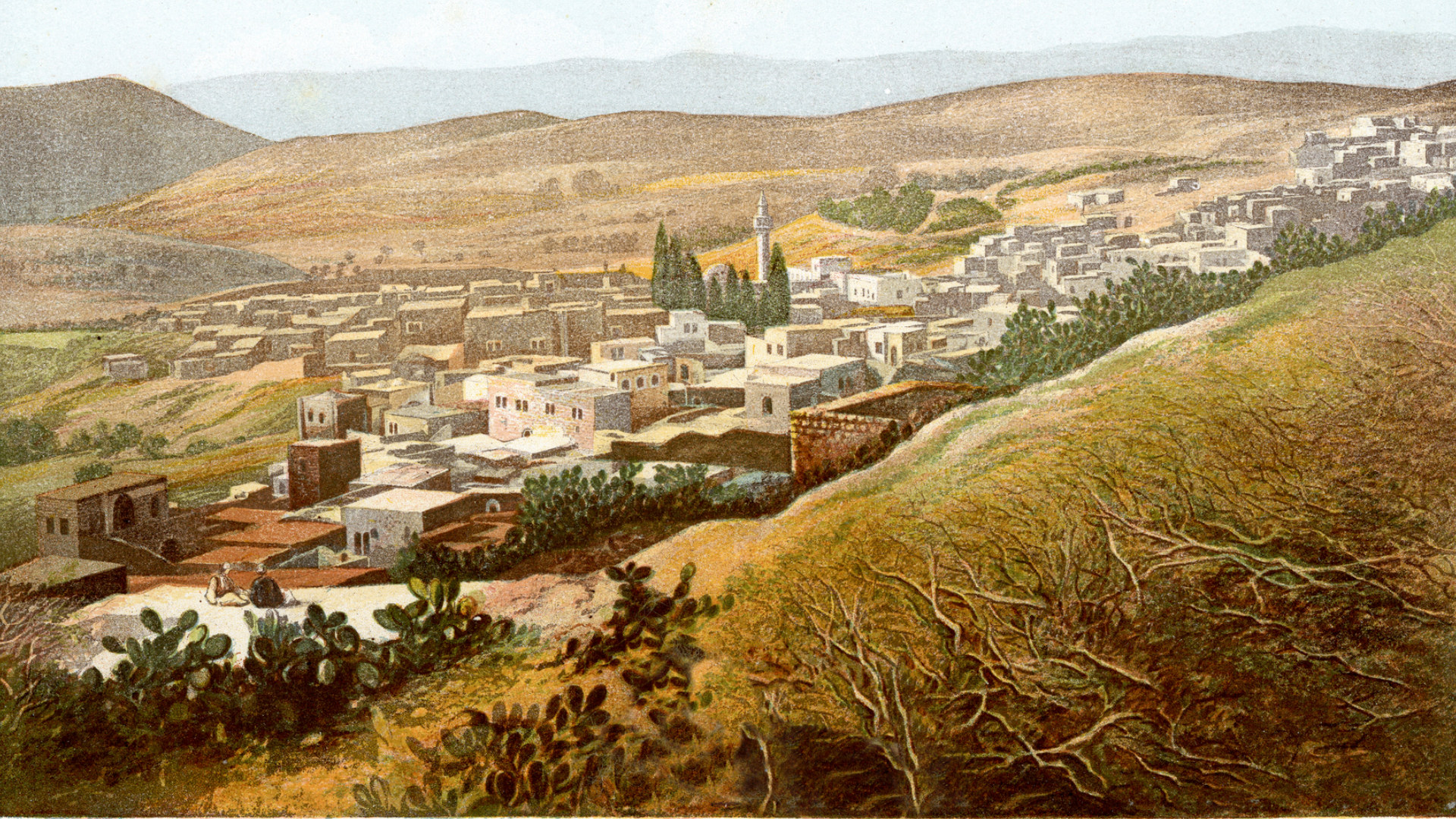
Matthew’s infancy narrative ends with a passage that has baffled biblical scholars: “And [Joseph] went and lived in a city called Nazareth, so that what was spoken by the prophets might be fulfilled, that he would be called a Nazarene” (Matt. 2:22–23). The problem is that the Old Testament never says the Messiah would be called a “Nazarene.” In fact, Nazareth isn’t mentioned in the Old Testament, and it’s believed that the town didn’t even exist when the Old Testament was written. Various theories have been suggested for Matthew’s meaning here, but I suggest the clue is to be found in the mystery (and even foolishness) associated with a Messiah coming from the obscurity of this small town in Galilee. ‘Nazarene’ Points to the Messianic ‘Branch’ Perhaps the most popular guess at Matthew’s meaning is that the name “Nazarene” is a play on words, as the Hebrew word for “branch” is nezer. This nezer or “branch” contains messianic connotations, or so it’s thought, based on the prophecy in Isaiah 11:1–3 of a coming Messiah: There shall come forth a shoot from the stump of Jesse, and a branch from his roots shall bear fruit. And the Spirit of the LORD shall rest upon him, the Spirit of wisdom and understanding, the Spirit of counsel and might, the Spirit of knowledge and the fear of the LORD. And his delight shall be in the fear of the LORD. Jesus is that Branch, that nezer, and his being called a Nazarene evokes that messianic image. Other passages also contain the image of a messianic “branch” but use a different Hebrew word (Jer. 23:5; 33:15; Zech. 3:8; 6:12). Was this the connection Matthew wants us to make? We can’t be sure, but another view is now gaining traction, and it has much in its favor. ‘Nazarene’ Points to Messianic Rejection Matthew’s citation in 2:23 differs in two ways from his typical formula when citing the Old Testament. First, he speaks of “the prophets” (plural), hinting that he isn’t referring to any particular prophecy but to a broader idea to which the prophets spoke. Second, the citation is introduced with the term “that” (hoti), rather than his usual term “saying” (legontos), suggesting a more general idea is in mind (cf. 4:6; 21:16). The word “that” merely introduces the general content of a prophetic tradition. The NIV rightly captures this thought: “So was fulfilled what was said through the prophets, that he would be called a Nazarene.’” The clue is to be found in the mystery (and even foolishness) associated with a Messiah coming from the obscurity of this small town in Galilee. During his life, Jesus is known as “Jesus of Nazareth” instead of “Jesus of Bethlehem.” But how could the Messiah come from such an insignificant village of probably less than 500 people, way up in the hill country of Galilee? In John’s Gospel, Philip tells Nathanael, “We have found him of whom Moses in the Law and also the prophets wrote, Jesus of Nazareth, the son of Joseph.” Nathanael replies, “Can anything good come out of Nazareth?” (John 1:45–46). A Messiah coming from Nazareth seems inconceivable and even foolish to Nathanael, as it would to any Jew. For Jesus, to be called a Nazarene seems nothing but an insult. Instead of labeling Jesus a Bethlehemite, Matthew identifies him as a Nazarene, one who would inevitably be misunderstood and ultimately rejected. This is precisely what the prophets predicted would happen. Consider the description of the Suffering Servant in Isaiah 53: “He grew up before him like a young plant, and like a root out of dry ground” (v. 2). The Servant’s origin would be unexpected and surprising. Isaiah continues, He had no form or majesty that we should look at him, and no beauty that we should desire him. He was despised and rejected by men, a man of sorrows and acquainted with grief; and as one from whom men hide their faces he was despised, and we esteemed him not. (Isa. 53:2–3) In the first-century Jewish mind, it would be foolish to think the Messiah could come from Nazareth, but doesn’t such an origin reflect the very foolishness of the gospel itself—the message of a crucified Messiah? Jesus describes as “foolish” those who were slow to believe all that the prophets had spoken, that the Messiah would have to suffer before entering his glory (Luke 24:25–26). In God’s mysterious design, his Son’s birth wouldn’t take place in a royal palace but in a cattle stall. He wouldn’t be raised in the luxury of a prince but in the humble home of a carpenter. He wouldn’t come from the political capital of Jerusalem, much less Rome, but from a tiny, obscure village outside the corridors of power. He’d be scorned by the religious leaders; he’d be despised and rejected, being held in low esteem; and he’d suffer the shame and agony of a Roman cross. He’d be, as the apostle Paul describes it, “a stumbling block to Jews and folly to Gentiles”—nothing but a Nazarene (1 Cor. 1:23). The Messiah must first suffer before entering his glory. ‘Nazarene’ as a Discipleship Calling “Can anything good come out of Nazareth?” You wouldn’t think so—but God arranged the events of Jesus’s birth so he’d be called a “Nazarene.” And in Acts 24, that’s just what Paul’s Jewish opponent derisively called Jesus’s followers—“Nazarenes” (v. 5). The Messiah must first suffer before entering his glory. That’s what it means to be a Christian. Take up your cross and follow Jesus, in his obscurity and humility, bearing his reproach, as he bore yours. Cast off all that would cause you to boast in the world—all your achievements and all your good deeds—all that would bring you honor and glory in the world’s eyes. In fulfilment of the words spoken by the prophets, Jesus was called a Nazarene. Are you willing to be called one, too?

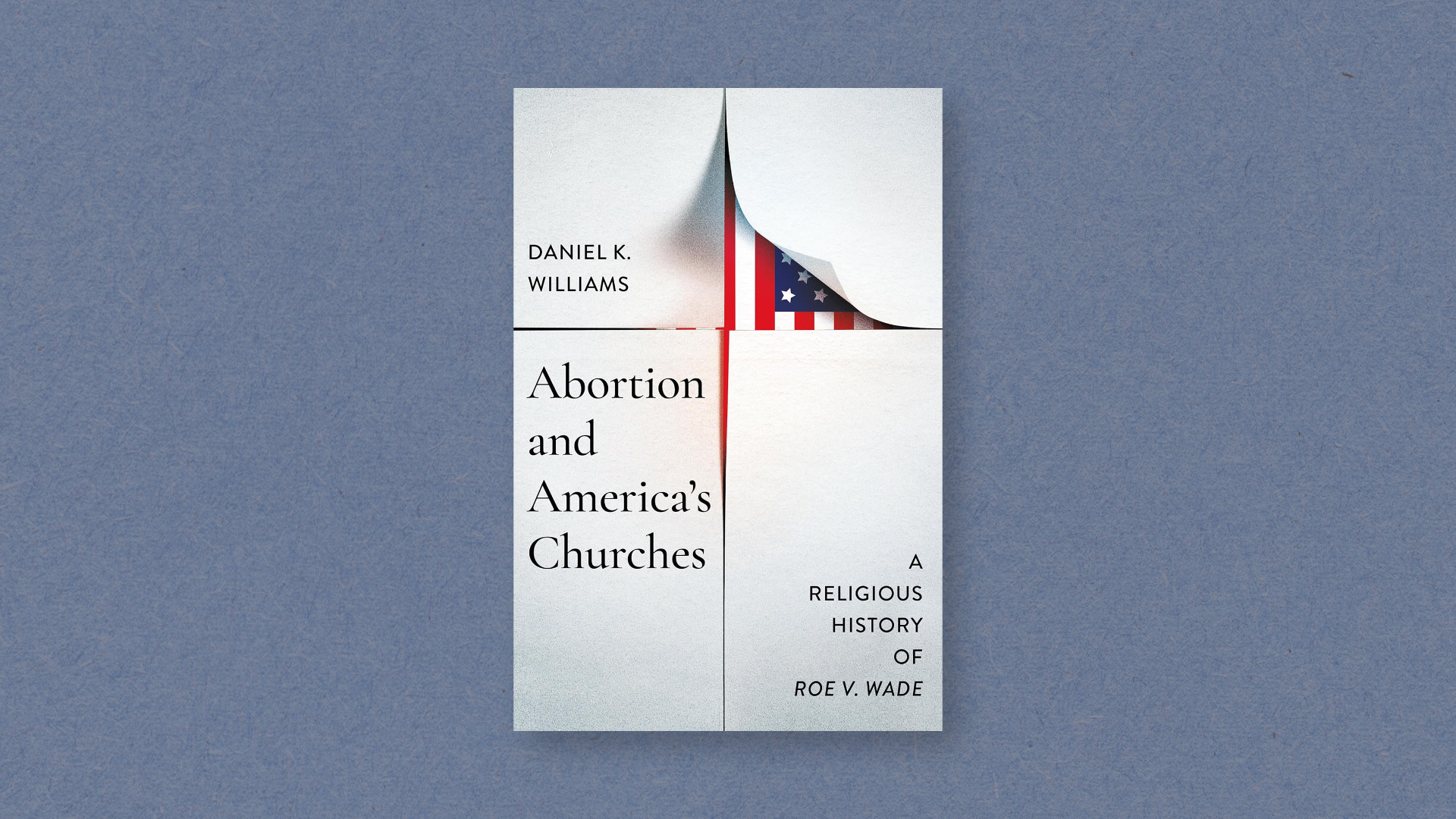
In 2014, the U.S. Supreme Court ruled that closely held private companies like Hobby Lobby don’t have to provide abortifacient contraceptive drugs in their health coverage. The basis of the majority opinion was religious liberty, which was widely celebrated by conservatives. However, in the aftermath of Dobbs v. Jackson Women’s Health Organization, when progressive religious organizations claimed abortion bans violate their conscience rights, those complaints were roundly criticized by many pro-life conservatives as motivated by partisan concerns rather than religious reasoning. In Abortion and America’s Churches: A Religious History of Roe v. Wade, Daniel K. Williams, associate professor of history at Ashland University, shows that the abortion issue is more complicated than we often see. Building on his previous histories of the pro-life movement and the Religious Right, Williams explains how major Christian subgroups in the United States developed their divergent positions on abortion despite claiming the same central religious tradition. As Williams shows, law, culture, and church teaching have all catechized Americans on the issue of abortion. Our culture, saturated with the language of rights and individualism, has masked the horrors of abortion in ways many don’t recognize. Christians will need to do the slow work of counter-catechesis if we hope to see elective abortion end. Changing Positions In the wake of the Roe v. Wade decision, Catholics and evangelicals in America united against abortion based on a shared commitment to a fixed standard of morality and the Christian framework for the law. They argued that a nation legally embracing abortion is denying its moral foundations and elevating individual conscience over objective morality. Our culture, saturated with language of rights and individualism, has masked the horrors of abortion in ways many don’t recognize. Meanwhile, many mainline and black Protestants united on the opposite side of the issue in the name of religious liberty, equality, and pluralism in a democratic society. For many liberal Protestants, building on the feminist movement, the moral agency of women required legally allowing the choice to keep or abort a pregnancy as dictated by individual conscience. The debate was often as much over a competing vision of America as over abortion itself. While evangelicals weren’t usually vocally pro-choice, neither were they consistently opposed to abortion. For example, in 1971, L. Nelson Bell—a physician, editor of Christianity Today, and father-in-law of Billy Graham—admitted he “performed abortions in cases where, after a full consultation, it was decided that termination of pregnancy was necessary.” Nevertheless, he was concerned about the “callous disregard for the realities of unwarranted termination of life” by abortion advocates, “which sears the souls of all concerned.” According to Williams, Bell’s position as both “an unrepentant performer of a few medically necessary abortions and an opponent of abortion who considered the procedure to be the ‘destruction of life’” was unexceptional to many evangelicals (94). However, abortion rates skyrocketed from 27,512 (1969) to 485,816 (1971) as states liberalized laws. That cultural jolt, and the apologetic work of figures like Francis Schaeffer, helped awaken evangelicals to oppose abortion much more forcefully in the mid-1970s. But even among pro-life Christians, opposition to abortion didn’t always translate into shared policy proposals. In 1989, though 63 percent of Catholics agreed abortion was murder, only 25 percent believed it should be banned entirely. The irony, Williams argues, was that “the pope and bishops had succeeded in convincing a majority of Catholics that abortion killed innocent unborn babies, but they had not convinced all of them that this moral stance should be translated into public law” (195). And yet, the law itself is a powerful teacher. Law Shapes Conscience Before Roe, the issue of abortion was seen as nuanced, especially by religious leaders and denominations supportive of laws liberalizing abortion access. Williams writes, “Roe was necessary, they believed, because abortion bans only made the situation worse. But abortion was never something to celebrate” (211). This was the position of the majority of mainline Protestants, and even leaders in some evangelical denominations. In the five decades since Roe, the ambiguity has disappeared. A 2022 Pew poll found that 47 percent of Americans believe abortion is wrong in most or all situations; however, only 22 percent say it should be illegal in situations where they deem it immoral. Our culture has shifted from quietly questioning the morality of abortion to calling women to “shout their abortion” in the wake of the Supreme Court decision to overturn Roe. Since April of 2022, the average number of abortions performed per month in the U.S. has increased from 79,600 to 98,800. This dramatic cultural shift shows how the law does more than simply list what’s prohibited and what’s permissible. The law shapes our moral imaginations and horizons for action. When something is legalized, it becomes an option often seen as equally valid as any other. The law shapes our moral imaginations and horizons for action. The Roe decision and the liberalizing state laws in the years before 1973 changed the moral calculus for many women. By making abortion permissible, the law subtly presents abortion as morally neutral. Many within our culture then move beyond that supposed neutrality to reframe abortion as morally good and praiseworthy. Thus, law and culture work together to catechize individuals toward a particular vision of the good, which in this case includes bodily autonomy and individual choice. Forming Consciences After Dobbs A great deal has changed since the 2022 U.S. Supreme Court ruling in Dobbs v. Jackson Women’s Health Organization, which overturned Roe v. Wade. As Williams notes, “Pro-life Christians have not always agreed on what a pro-life society would look like” (295). Thus, the movement is now splintered by debates over the pursuit of state and national abortion bans, the benefits of funding a more robust social safety net, and whether being “pro-life” requires a “whole life” focus. Amid these many debates, Christians should remain steadfastly focused on seeing hearts and minds transformed by the gospel’s power. In opposition to our culture’s message of individualism and autonomy, the church should offer a subversive counter-catechesis that affirms the value of everyone because all are made in God’s image. Counter-catechesis requires consistently teaching biblical truth, because, as Williams observes, “Our views on abortion are inseparably related to our larger convictions about theological matters” (xix). For pro-life laws to stick, we need our theological convictions about the value of human life to permeate our churches and our culture. Written in a thoroughly evenhanded manner, Williams’s academic account of the religious contours of the abortion debate explains more than it advocates. He shows how media, politics, and law have shaped religious perspectives in divergent ways, which can help readers better understand how to dialogue with those on the opposite side of the issue. More significantly, Abortion and America’s Churches reminds pastors and scholars that ending elective abortion requires not only changing laws but changing hearts as well.

Sorry, No Promotion data found!

Sorry, No Photo found!

Sorry, No Video found!

Sorry, No Reviews data found!

Sorry, No Announcements data found!

Sorry, No events data found!

Sorry, No jobs data found!

Loading...
Loading...
Confirmation
Are you sure?
Cancel Continue