For the best experienceDownload the Mobile App


Business Logo

Christian Daily International

Open 24/7

Categories
Entertainment and Media

Opening Hours

S
M
T
W
T
F
S
All

Open 24/7

Open 24/7

Open 24/7

Open 24/7

Open 24/7

Open 24/7

Open 24/7

Days Opening Hours
Monday 8:00 AM - 5:00 PM
Tuesday 8:00 AM - 5:00 PM
Wednesday 8:00 AM - 5:00 PM
Thursday 8:00 AM - 5:00 PM
Friday 8:00 AM - 5:00 PM
Saturday 8:00 AM - 5:00 PM
Sunday 8:00 AM - 5:00 PM

About this Business

Launched in 2023, Christian Daily International is based at the World Evangelical Center in Dover, NY with its leadership team, editors and reporters spread around the world.CDI is a brand of The Christian Post company, which is headquartered in Washington D.C. CEO: Dr. Christopher ChouCDI is accredited by the Evangelical Press Association since January 2, 2024.Christian Daily International provides biblical, factual and personal news, stories and perspectives from every region, focusing on religious freedom, integrated gospel and other issues that are relevant to the global Church today.It is the vision of a group of Christian people, followers of Jesus, who are committed to professional journalism that is full of grace and truth (Jesus is described in that way- John 1:14).
Read More

News & Announcements

View All

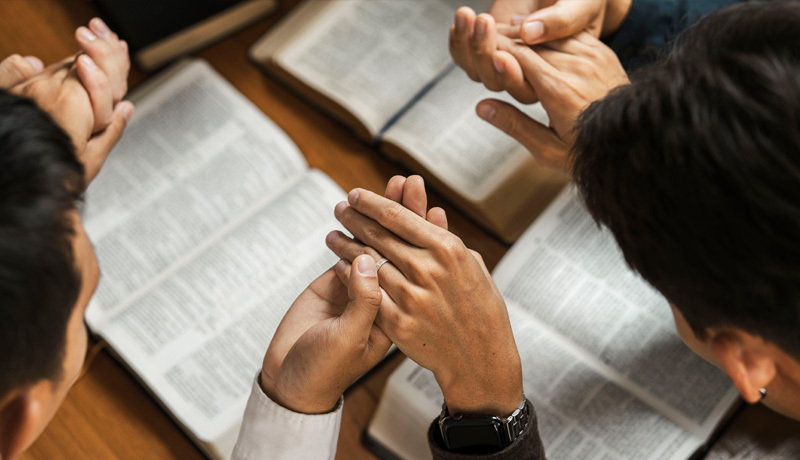
In an era that emphasizes scale and speed, this church has chosen a slower, steadier path. deeangelo60141735/Envato In an ordinary apartment building in a city in northwest China, a warm light glows from a single window as night falls. There is no cross, no pulpit, and no choir. Three chairs surround a small tea table, a phone plays hymns, and a well-worn Bible rests nearby—the humble beginnings of a church. Three people would be enough... as long as we gathered in the name of the Lord. “At that time, I thought three people would be enough. As long as we gathered in the name of the Lord, the church had already begun,” recalled Pastor Wang.  From that first gathering of just three people, a small church guided by the principle of slow growth has gradually taken root in daily life, quietly reshaping perceptions of what a church can be.  Vigil and faith outside the ICU Shortly after the church was founded, Pastor Wang and his team met a couple going through a life crisis. The wife had been admitted to the ICU with kidney failure, and for several days, Pastor Wang and fellow believers kept vigil outside the ward, praying, offering comfort, and simply being present for the family. With God, I felt saved. I want to believe in Jesus. "God preserved her and gave her a final chance to accept Christ as the Lord of her life," Pastor Wang said. When her condition stabilized enough to move to a regular ward, she said, “It was hard in there, but with God, I felt saved. I want to believe in Jesus.” She was soon baptized.  Although she eventually passed away, her testimony brought deep comfort and encouragement to the congregation. Pastor Wang and members also assisted her husband and child with funeral arrangements. Prolonged illness had left the family both financially strained and socially isolated. Church members prepared simple meals for funeral guests, bringing a sense of warmth and life back to the home. Eventually, the husband also chose to be baptized, even though he did not continue attending this home church. “I respect each person’s choice,” Pastor Wang said. “What matters most is that they repent and come to faith.” Subtle transformation in daily life Sister Cui, a devoted member of the church, initially faced tension at home because her husband struggled to understand her faith. During the pandemic, when in-person gatherings were suspended, she continued to read the Bible, sing hymns, and warmly welcome fellow believers into her home. They would sit together on the sofa, chatting about daily life, sharing testimonies, and sometimes singing hymns one after another. Their service really reaches people’s hearts. Cui also participated in visits to the sick, the weak, and those in need. Over time, her husband, Mr. Chen, witnessed her faithful service and saw his heart gradually soften. While he has not yet been baptized, his attitude toward faith has clearly shifted. “Their service really reaches people’s hearts,” he said. The wisdom of “slow growth” In an era that emphasizes scale and speed, this church has chosen a slower, steadier path. Over seven years, it has established only five home gatherings. “We don’t need large numbers. Our focus is on cultivating commitment, so members truly understand what it means to be a disciple,” Pastor Wang explained. The church does not require members to stay in one location but respects their freedom of choice. “Where people gather is their decision. As long as they want to grow together, we accompany them, and they won’t be harmed in any way by us.” From simple Bible study sessions to systematic discipleship training, the church centers on home-based gatherings, allowing faith to grow naturally in daily life. “Every meeting is an encounter with the Lord and with truth. This process cannot be rushed,” Pastor Wang said. Rooted in the ordinary Today, what began as a three-person gathering has developed into a stable and flexible model: open homes for consistent meetings, and a focus on nurturing discipleship. Faith has become part of daily life, not confined to a church building. (The) patient, steady approach... may be key to cultivating the next generation of faithful believers. Looking to the future, Pastor Wang remains practical and steadfast: “We may not do great things like some famous pastors, but we can do simple, grounded work within our capacity.” This patient, steady approach, he believes, may be key to cultivating the next generation of faithful believers. As night falls, the ordinary window continues to glow, soft hymns drifting into the quiet street. For seven years, this northwest China house church has demonstrated how faith can thrive in the most ordinary settings, showing the extraordinary power of patience and presence. Originally published in English by ChinaSource. Republished with permission. Written, translated, or edited by members of the ChinaSource staff, often from original material published in Chinese languages. In this instance, this article was originally published in Chinese by the Christian Times and the English version was published by China Christian Daily, which ChinaSource republished. All names in this article have been changed to protect the individuals involved. ChinaSource is a trusted partner and platform for educating the global church on critical issues facing the church and ministries in China, and for connecting Christians inside and outside China to advance the kingdom of God globally. ChinaSource's vision is to see the church in China and the global church learning and growing together, engaging in ministry that powerfully advances the kingdom of God.

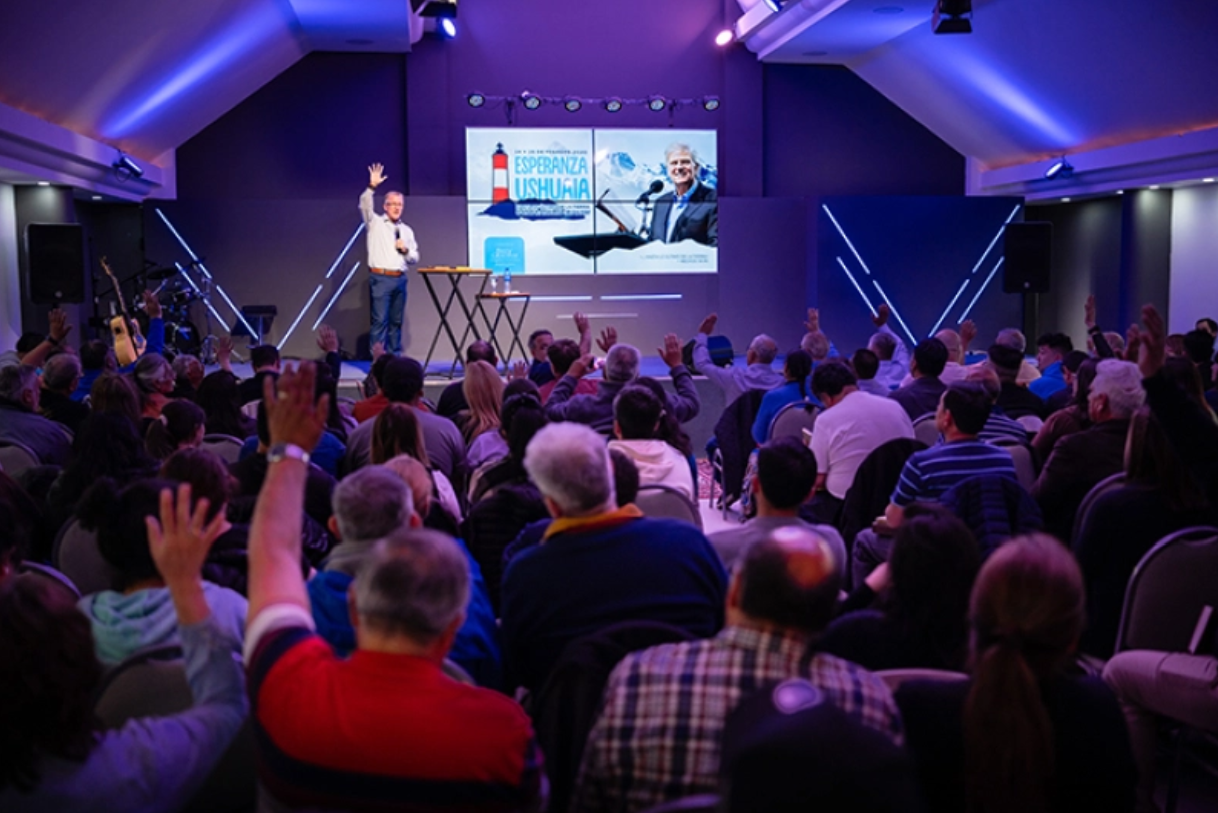
In the southernmost city in the world, local believers eagerly prepare for the Ushuaia Hope Festival led by the Billy Graham Evangelistic Association, while hundreds complete a training course that seeks to strengthen Christian faith and witness in a region with a small number of believers. Photo: BGEA More than 3,000 kilometers from Buenos Aires, at the southern tip of Latin America, the city of Ushuaia—considered the southernmost city in the world and nicknamed "the end of the world"—is preparing for a large-scale spiritual event that has generated anticipation for revival among local churches and across the province of Tierra del Fuego. The Billy Graham Evangelistic Association (BGEA) has announced that the Festival of Hope Ushuaia will take place next February. The evangelistic event will feature biblical preaching, messages of encouragement and free concerts. Preparations include the Christian Life and Witness Course (CLWC), through which believers are trained to share their faith and mobilize their communities, according to BGEA. For pastors in the region, the current movement of faith is no coincidence. After learning that evangelist Franklin Graham would be visiting Argentina, leaders such as Fabián Rotenberg and Javier Campero traveled to Buenos Aires to propose that the festival be held in Ushuaia. Once the date and BGEA’s plans were confirmed, local leaders promoted the training course, which has already been attended by about 2,000 people. The course has exceeded expectations. Church buildings have been filled to capacity, some attendees have sat on stairways to receive biblical teaching and practical instruction on Christian witness, and groups have begun planning ways to invite neighbors and family members to the festival. One of the key preparation practices has been writing down the names of people to pray for and committing to pray for them daily. Pastors say this phase has equipped believers for evangelism and strengthened the unity among congregations. Campero highlighted that the atmosphere of faith, dialogue and prayer has shaped not only the festival’s preparation but also the spiritual life of many local believers. “We are living days of great expectation, unity and trust in God,” he said. Although Ushuaia has fewer than 100,000 residents, and local estimates suggest that just over 10% of the population has a personal relationship with Jesus Christ, the initiative and enthusiasm of the churches have been evident, according to organizers. Pastors and leaders are praying that the festival will mark a turning point for the region, with an impact that extends beyond the the event itself. While it is an opportunity for evangelism, they also see it as a moment of community gathering and reflection that strengthens hope, peace and a sense of belonging to a shared faith. This comes in a remote part of the country where daily life often revolves around tourism, work and port activity. The Festival of Hope Ushuaia is shaping up to be one of the most significant religious initiatives for believers at the southern tip of South America, with the expectation that many who have drifted away from the church will return and that others will experience a transformative encounter with the Christian message. Originally published by Diario Cristiano, Christian Daily International's Spanish edition.

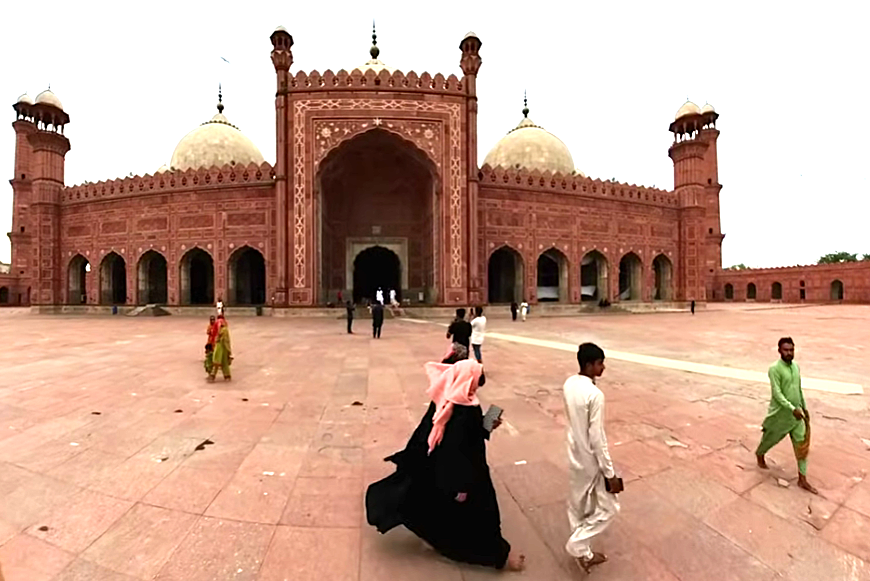
Badshahi Mosque in Lahore, Pakistan. Screenshot from YouTube After multiple setbacks for a Christian family in Pakistan striving to recover their forcibly married/converted 13-year-old daughter, a federal court on Friday (Jan. 9) ordered police to find and present her and the Muslim who kidnapped her, sources said. A two-judge bench of the newly constituted Federal Constitutional Court (FCC) ordered police to present in court Maria Shahbaz and 30-year-old Shehryar Ahmad before Friday (Jan. 16). Ahmad abducted her on July 29, forcibly converted her to Islam and married her, Supreme Court Attorney Rana Abdul Hameed said. Justice Ali Baqar Najafi and Justice Karim Khan Agha admitted rhe petition by Shahbaz Masih, Maria’s father. “After our petitions for the child’s recovery were rejected by the sessions court in Lahore and the Lahore High Court, we decided to challenge those decisions before the FCC,” Hameed told Christian Daily International-Morning Star News. “We informed the court that the girl is a minor and is being subjected to rape under the guise of Islamic conversion and marriage.” Lahore police colluded with the suspect, leading a magistrate’s court to discharge the family’s abduction complaint, Hameed said. “The girl was forced to record a statement claiming she had willingly converted to Islam and married Ahmad,” he said. “She also falsely stated that she was an adult, despite official documentary evidence proving that she is a minor and below the legal age of marriage under provincial child marriage laws, which prohibit the marriage of girls under 16.” Rights activist Safdar Chaudhry welcomed the court’s order, saying that despite repeated setbacks in Lahore courts, the Masih family had remained steadfast in its pursuit of justice. “We repeatedly petitioned the courts, arguing that the girl was a minor and could not be allowed to remain in the custody of the accused, but our pleas were rejected solely on the basis of the child’s statement before a magistrate,” Chaudhry said. “We are grateful to the FCC judges for admitting our legal arguments and ordering the child’s production in court. We are hopeful that the court will take notice of the violation of child marriage laws and order legal action against the accused.” Chaudhry, also chairman of Raah-e-Nijaat Ministry, is assisting the Masih family in the legal battle. Masih, a driver and father of five, said that his neighbor, Ahmad, abducted his daughter when she stepped outside their home to go to a nearby shop. Masih filed a First Information Report (FIR) with Nawab Town Police Station in Lahore, but on Aug. 1 police informed him that Maria had recorded a statement on July 31 before Model Town Judicial Magistrate Hassan Sarfaraz Cheema claiming she had converted to Islam and married Ahmad of her own free will. Rights advocates say such cases follow a familiar pattern in Pakistan, where kidnapped girls, some as young as 10, are abducted, forcibly converted to Islam, and raped under the cover of Islamic “marriages.” Victims are often pressured to record false statements in favor of their abductors, while judges routinely ignore documentary evidence of age and return the children to their kidnappers as “legal wives.” Pakistan President Asif Ali Zardari on May 29 signed into law a landmark bill aimed at curbing child marriage in the Islamabad Capital Territory (ICT), setting the minimum marriage age at 18 for both genders. The law was enacted despite fierce opposition from Islamist groups, including the Council of Islamic Ideology (CII), the country’s top Islamic body. The CII declared that classifying marriage under the age of 18 as rape did not conform to sharia (Islamic law). A similar bill has been pending in the Punjab Provincial Assembly since April 25, 2024. In Punjab, the minimum legal age of marriage for girls remains 16. Nationally, the Christian Marriage (Amendment) Act 2024 raised the marriageable age to 18 only for Christians; however, if Christian girls convert to Islam, they are treated as Muslims under sharia, which allows marriage at a younger age. Pakistan, where more than 96 percent of the population is Muslim, ranked eighth on Open Doors’ 2026 World Watch List of the most difficult countries in which to be a Christian.

Sorry, No Promotion data found!

Sorry, No Photo found!

Sorry, No Video found!

Sorry, No Reviews data found!

Sorry, No Announcements data found!

Sorry, No events data found!

Sorry, No jobs data found!

Loading...
Loading...
Confirmation
Are you sure?
Cancel Continue